
FABRIC Expands High-Speed Connectivity with New 100-Gigabit Link Between Miami and Atlanta
December 17, 2025
Original Article is published here.
FABRIC successfully deployed a dedicated 100-gigabit network link connecting its Miami edge node at Florida International University (FIU) to a core FABRIC site in Atlanta. This connection enhanced the strength of FABRIC’s nationwide footprint and provides researchers with a high-capacity, Layer 1 path designed specifically for reproducible, experimental networking at scale. The link, one of two 100-gigabit connections at the FIU site, serves as a critical piece of infrastructure enabling controlled, end-to-end experiments between FABRIC’s programmable resources. As FIU’s Jeronimo Bezerra noted, the dedicated fiber “ensures FABRIC can achieve its reproducible goals… because there’s nobody else on that link other than FABRIC.”
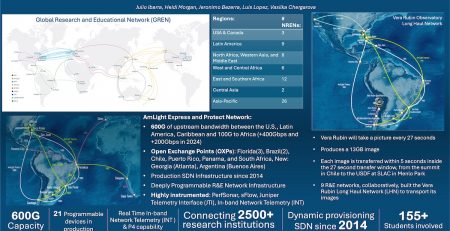
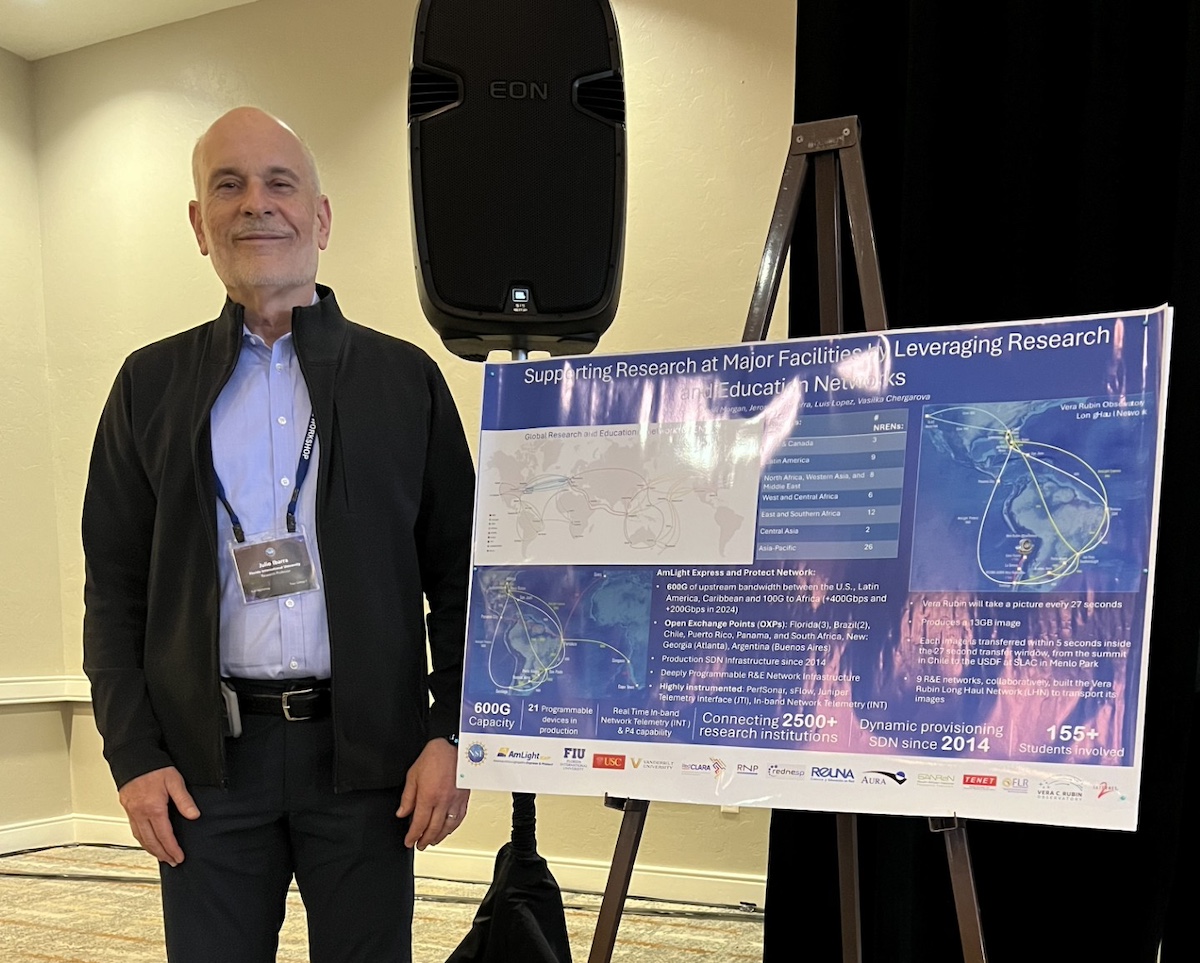
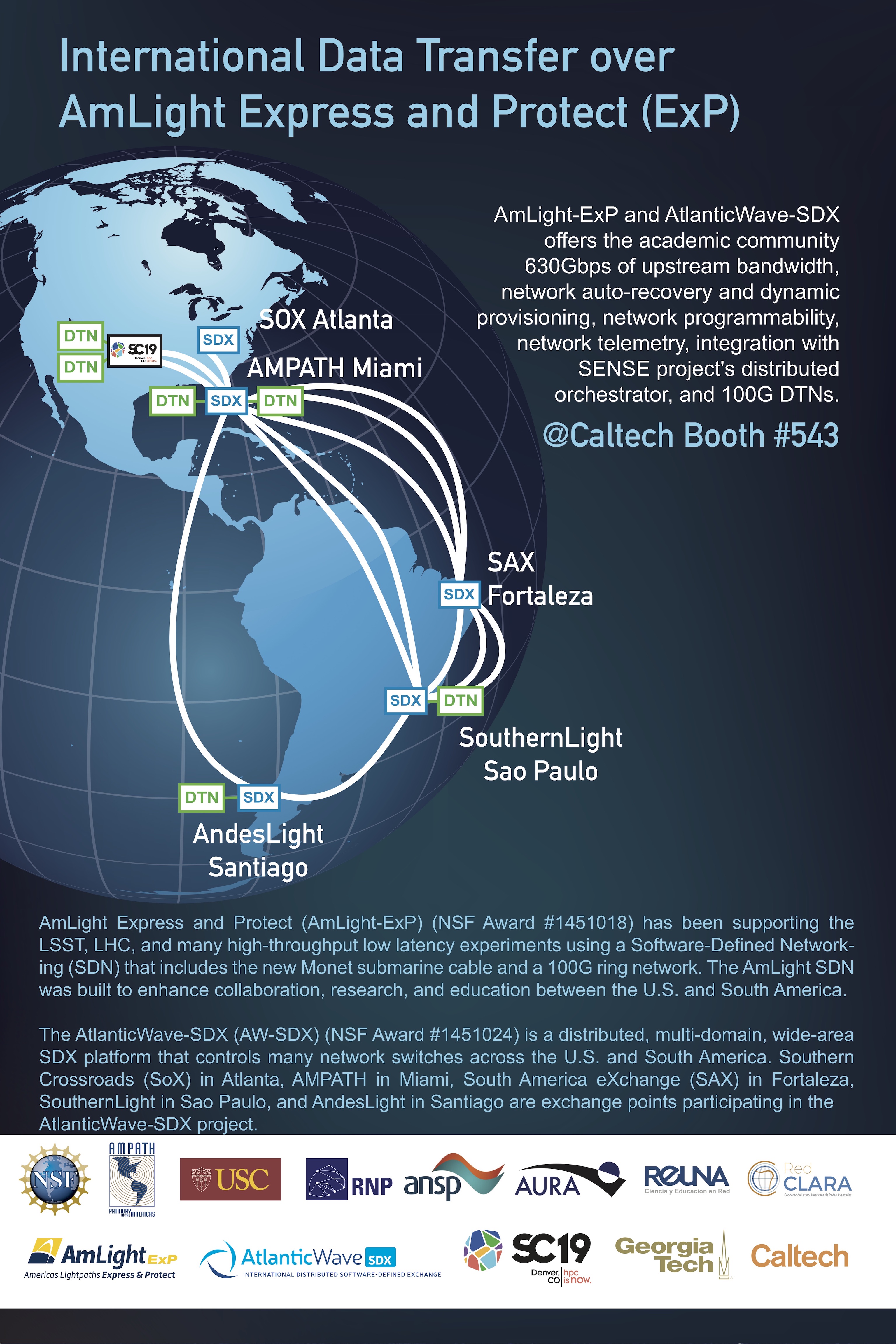
For FIU’s Center for Internet Augmented Research and Assessment (CIARA) team operating AmLight, a major international research network connecting the U.S. to Latin America and Africa, this new link enables advanced experimentation that is not possible on current production infrastructure. By transporting real-time network telemetry from AmLight to FABRIC nodes, researchers are leveraging programmable switches, smart NICs, and emerging data processing units to study network behavior under real-world conditions. This capability is especially important for security research, including detecting and characterizing distributed denial-of-service (DDoS) attacks that can severely impact smaller institutions. “FABRIC lets us simulate conditions we might see in the wild, without putting our production network at risk. The ability to test, analyze, and learn at that scale is transformative,” says Bezerra.
The Miami–Atlanta link also enables FIU to pursue new AI-driven approaches to network automation and threat detection. By moving live telemetry metadata into FABRIC’s distributed compute environment, researchers can train models, test mitigation strategies, and evaluate software-defined networking workflows before deploying them into production. The result is a powerful testbed connection that not only advances FIU’s research but also demonstrates how high-speed, dedicated paths within FABRIC can accelerate scientific discovery and strengthen the resilience of research networks around the world.